Operational Insights

Joe Monroe

Why After-Action Reviews Are Critical for Campus Safety

Joe Monroe, Chief of Police at the University of Kentucky, explains the importance of after-action reviews following every incident or event. He describes how continuous evaluation helps identify gaps, improve communication, and strengthen future response strategies.
WesternU

Managing Safety Across Multiple Campuses and States

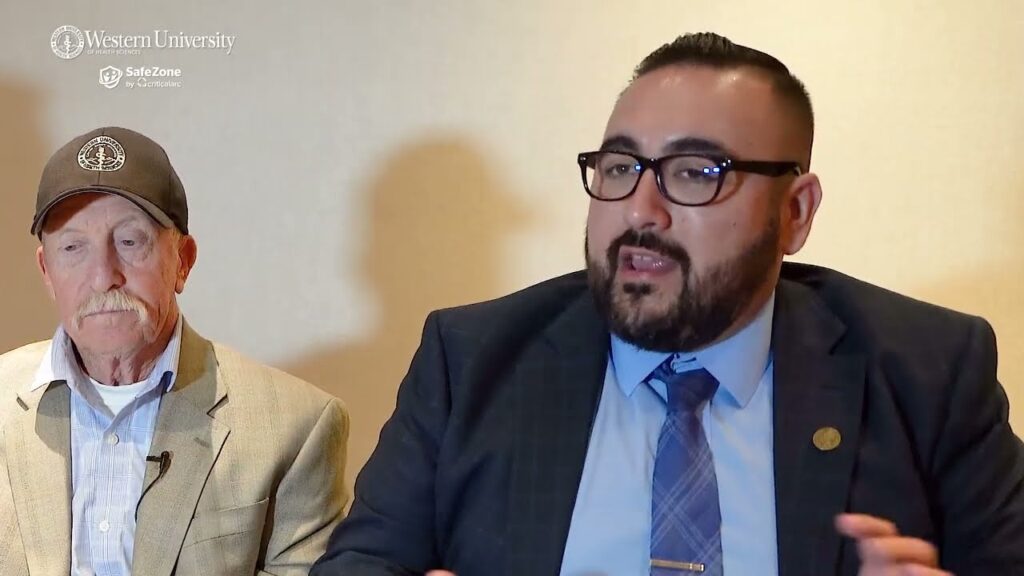
Associate Vice President of Operations Gabriel Valencia-Martinez, Manager of Campus Security Seth Miller, and Director of Security David Sevesind at Western University of Health Sciences explain how SafeZone enables WesternU to manage safety across campuses in California and Oregon. They highlight resource sharing, geofenced messaging, and centralized dispatch as key advantages for multi-campus operations.

Jon Barefoot

How Streamlined Alerts Improve Response Speed in Healthcare

Jon Barefoot, Vice President of Security, Safety, and Disaster Preparedness at Indiana University Health, explains how SafeZone improves operational efficiency by streamlining emergency calls. He describes how faster, more informed responses reduce dispatcher workload while maintaining high safety standards.

Joe Monroe

Improving Safety and Response at Large Campus Events

Joe Monroe, Chief of Police at the University of Kentucky, explains how SafeZone improves preparation and response for large-scale events. He highlights how real-time location awareness helps deploy officers more efficiently and reduce response times during incidents.

Barbara O'Connor

Why Continuous Improvement Is Essential for Public Safety Leadership

Barbara O’Connor, Assistant Vice President for Public Safety at Florida State University, reflects on leadership in public safety and the importance of continuous quality improvement. She explains why the most effective leaders are never satisfied with the status quo and how this mindset leads to safer campuses and stronger communities.

Texas A&M

From Static Plans to Real-Time Decision-Making on Game Day

Mike Johnson, Chief of Police at Texas A&M University, and Kary Shaffer, Assistant Chief at Texas A&M University, explain how SafeZone transforms static event action plans into live, real-time operations. They describe how messaging, location awareness, and live updates support faster, more informed decision-making during evolving incidents.

Jon Barefoot

Scaling Safety Across a Complex Healthcare Enterprise

Jon Barefoot, Vice President of Security, Safety, and Disaster Preparedness at Indiana University Health, explains how SafeZone provides consistent safety access across 17 hospitals and hundreds of locations. He describes how a single platform simplifies emergency response regardless of location or staffing model.

Joe Monroe

Why Consolidating Safety Systems Improves Campus Response

Joe Monroe, Chief of Police at the University of Kentucky, explains how consolidating multiple safety platforms into SafeZone reduced complexity and improved efficiency. He shares how streamlining systems enabled faster, more reliable emergency messaging across campus.