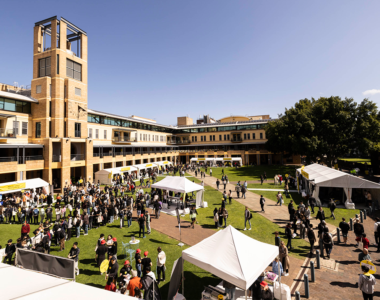
The University of Leicester and University Hospitals of Leicester NHS Trust are leveraging SafeZone and the SafeZone Alliance to create a more connected approach to safety across the city, supported by Leicester City Football Club.
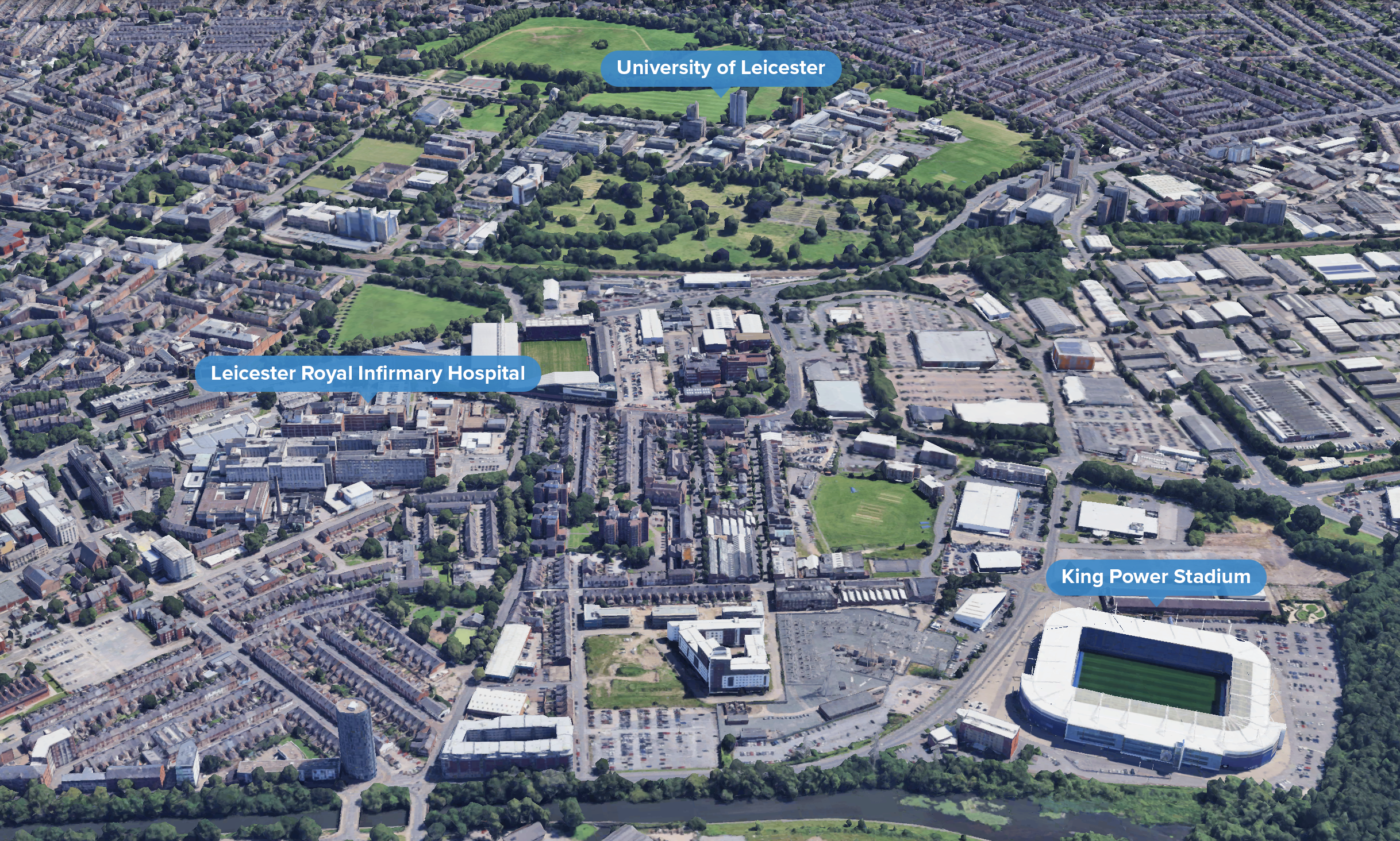
In Leicester, organisational boundaries rarely reflect how people actually move. The University of Leicester (UoL) sits a short walk from Leicester Royal Infirmary, part of the University Hospitals of Leicester NHS Trust (UHL). A few minutes further south is King Power Stadium, home to Leicester City Football Club (LCFC).
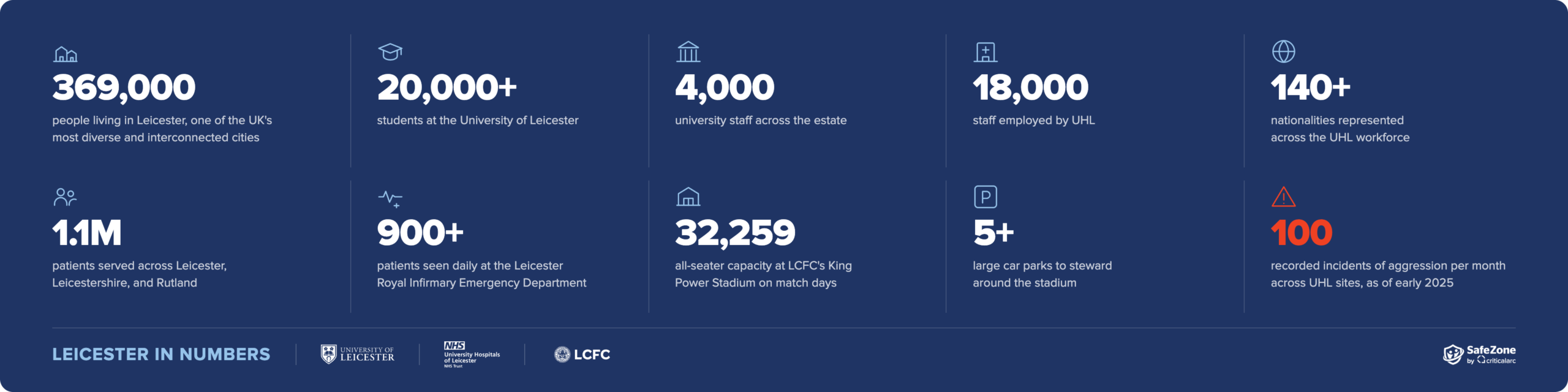
Students move between campus and clinical placements. Hospital staff travel through streets surrounding the university and stadium. On matchdays, more than 32,000 supporters can arrive in the same part of the city. The boundaries may be clear on a map but for the people living, working and studying in the city, they are far less obvious. That’s why SafeZone and the SafeZone Alliance makes sense for Leicester: helping to foster a safety net that moves with people instead of stopping at an institutional boundary.
Sharing a diverse and complex environment… and overcoming the challenges that come with it
Leicester is one of England’s most diverse cities, with a population of almost 369,000 and communities drawn from a wide range of backgrounds. Its major institutions reflect that scale and diversity, with the University of Leicester supporting more than 20,000 students and around 4,000 staff. Meanwhile, UHL employs around 18,000 colleagues representing more than 140 nationalities and provides healthcare for approximately 1.1 million people across Leicester, Leicestershire and Rutland.
The safety challenges are significant too. Leicester Royal Infirmary’s Emergency Department frequently sees more than 900 patients a day, while UHL reported around 100 recorded incidents of aggression, including physical assault and verbal abuse, across its sites each month in early 2025. For teams across these institutions, keeping people safe cannot simply mean protecting individual buildings. Their communities are constantly moving beyond them.
“We’ve got three main sites, eight community hospitals, colleagues from a variety of teams going into the community to work in individual addresses. The challenges that we face across our communities are challenges that we face here within our hospital setting.”
Kim Hudson, Head of Security at the University Hospitals of Leicester NHS Trust
The crossover between education and healthcare
Higher education and healthcare share many of the same safety challenges. Both operate large, open estates. Both welcome thousands of people every day. Both function outside conventional working hours, and both have communities moving between buildings, car parks, public spaces and neighbouring organisations.
In Leicester, the crossover is particularly strong. UHL is a major teaching centre, with University of Leicester students training in its hospitals and clinicians, academics and researchers moving regularly between both environments. For those people, it makes little sense for access to support to disappear because they have crossed from one organisation’s estate to another.
Boundless support through the SafeZone Alliance
SafeZone gives students, staff and other authorised users a direct way to raise an alert, request help or share their location with the teams responsible for keeping them safe. The SafeZone Alliance extends that capability across participating organisations, enabling teams to provide a greater level of assurance and support to the communities they have a duty of care over.
UHL became the first acute NHS trust to use SafeZone and the first NHS organisation to join the SafeZone Alliance, working with the neighbouring University of Leicester so their communities could continue to access support across each other’s sites. LCFC adds another layer to that networking in that its longstanding relationship with UHL enables reciprocal security support. If a UHL SafeZone user raises an alert while on LCFC grounds, the organisations work together so the team best placed to respond can provide assistance.
The principle is simple: the person who needs help matters more than which organisation owns the ground beneath their feet.

“We like to play our part in keeping people safe. Any incident that happens on our site affects businesses around us. It affects the community and I think it’s really important that we play our part in that and that we can provide a safe environment.”
Warren McGhee, Security Operations Manager at Leicester City Football Club
The Alliance gives neighbouring organisations a practical way to connect their existing safety capabilities, enabling them to do more with less. That means a more consistent experience for students and staff, clearer co-ordination between response teams and greater flexibility when someone needs help beyond their usual site. It can also strengthen the wider safety net. When teams communicate and collaborate more effectively, they are better placed to support visitors and members of the public when incidents occur in and around their estates.
Why the Leicester city collaboration matters under Martyn’s Law
That ability to work across organisational boundaries will only become more important for the future. The Terrorism (Protection of Premises) Act 2025, commonly known as Martyn’s Law, introduces new requirements designed to improve preparedness and public protection at qualifying premises and events. The statutory guidance recognises that responsibility for complex environments may involve multiple parties and includes provisions around co-ordination and co-operation where responsibilities or premises overlap.
Through SafeZone and its Alliance initiative, UoL, UHL and LCFC demonstrate the value of organisations understanding how their environments intersect, how their teams communicate and how they can work together should an incident occur.

“We have staff and students who are members of the university but they might be carrying out some work or part of their [study] programme is to be at the University Hospitals of Leicester. Improving those links and having that seamless experience for our communities is really beneficial for them. So, it doesn’t matter whether they’re a student or staff member, they know they’re getting a seamless safety experience regardless of where they are.”
Laurence Perkins, Deputy Director of Campus Services at the University of Leicester
One connected safety net
For the University of Leicester and UHL, SafeZone is about more than a tool for requesting support. Alongside the Alliance initiative, SafeZone helps safety support follow people as they move between the places where they study, work, train and travel.
As Paul Gowdridge, Chief Financial Officer at the University of Leicester, puts it:

“The most important things we can do with the pound that we spend – however many pounds that is in each institution – is to make it most effective. And I don’t think there’s a much more effective way of deploying this sort of assurance and support for our community than the pound that we spend on SafeZone.”
Paul Gowdridge, Chief Financial Officer at the University of Leicester
In a city where education, healthcare, sport and the wider community overlap every day, that shared approach is helping Leicester’s institutions expand their ability to keep people safe, wherever they happen to be.
Watch the case study to hear directly from the teams at the University of Leicester, University Hospitals of Leicester NHS Trust and Leicester City Football Club about how they are working together to create a more connected safety network across this diverse and complex city.
Could your SafeZone community go further?
If your organisation already uses SafeZone but isn’t yet part of the SafeZone Alliance, get in touch! We would love to help you explore how neighbouring universities, healthcare providers and other organisations could connect their safety capabilities and extend support beyond their individual boundaries.



 Posted 21st Aug 2026