

Authored by Nick Schneider, Director – Upper Midwest, CriticalArc
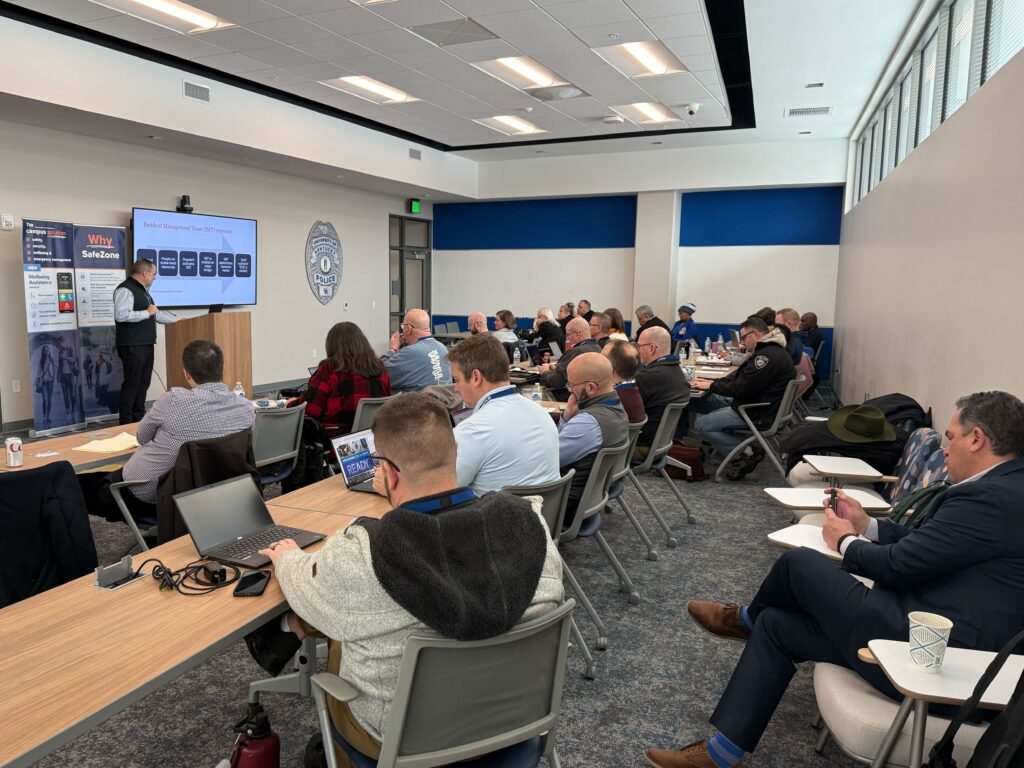
Earlier this month, campus safety and emergency management leaders from across Kentucky, Indiana, Ohio, and Tennessee gathered in Lexington for the University of Kentucky Symposium & Training, a two-day event focused on strengthening institutional readiness through collaboration, leadership, compliance, and technology.
Hosted in partnership with the University of Kentucky Police Department, the symposium brought together chiefs of police, associate vice presidents, directors of public safety, emergency managers, and senior administrators for candid, peer-driven discussions on today’s most pressing campus safety challenges – and how institutions can better prepare for what’s ahead.
Across both days, several themes consistently emerged: the growing expectation that campus safety leaders operate at the executive level; the risk institutions face when decision-making, communication, and technology are siloed; and the importance of building trust – with senior leadership, campus partners, and the broader community – before a crisis occurs.
The agenda was intentionally designed to bridge strategy and operations, combining in-depth regulatory training with real-world leadership perspectives from large, complex campus environments.
Day One: Clery, Compliance, and Institutional Risk
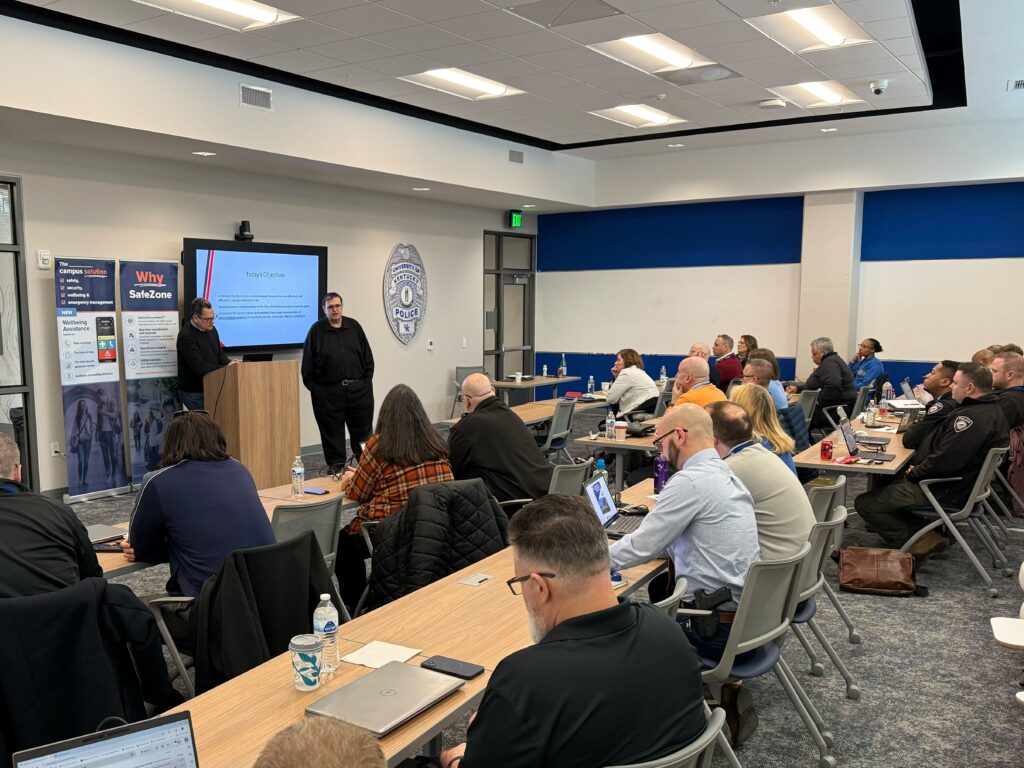
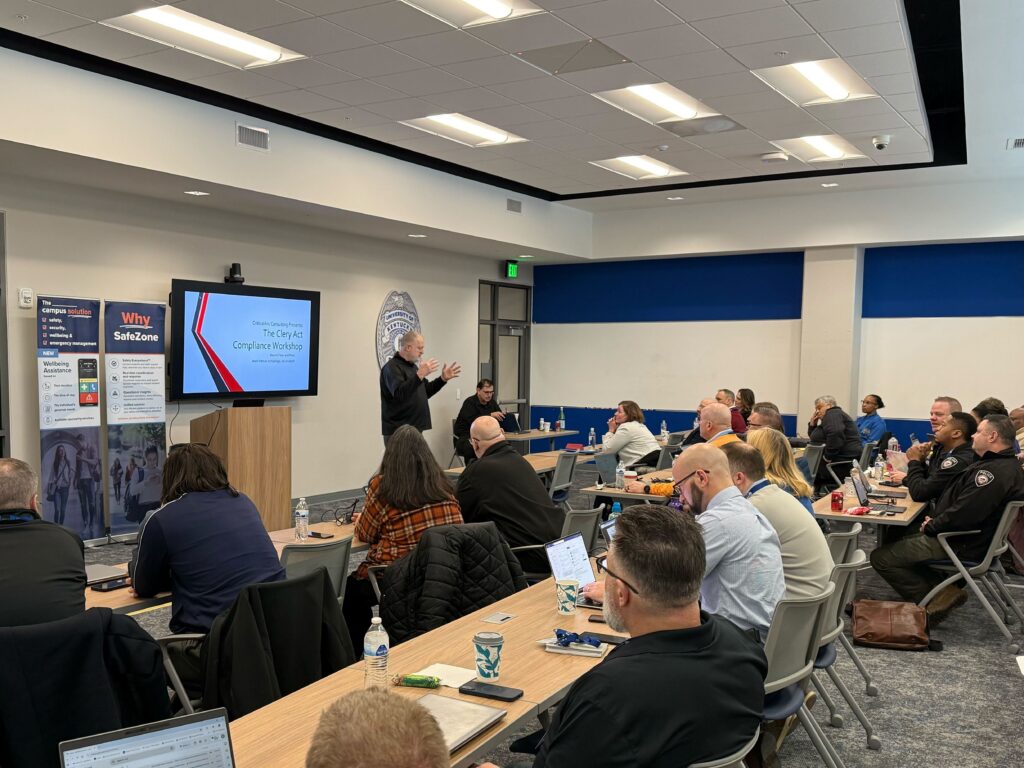
Day One centered on Clery Act compliance as a leadership and enterprise risk management responsibility, rather than a standalone regulatory requirement – Led by Jim Moore and Jonathan Kassa, Senior Executive Consultants at CriticalArc.
Opening the day with the origins of the Clery Act, the discussion emphasized that Clery is not going away – and that lack of institutional capacity, inconsistent governance, or misalignment between policy and practice can expose universities to significant regulatory, financial, and reputational risk. Participants explored how well-intentioned but undocumented decisions, contradictory policies, or reactive changes made under pressure can later undermine institutional defense during federal review.
A significant portion of the day focused on the Stop Campus Hazing Act, one of the most recent unanimously passed federal laws. Attendees spent significant time unpacking the Stop Campus Hazing Act’s broad and evolving definitions – particularly what constitutes an “affiliated” organization. The discussion sparked extensive questions around associate versus full membership, how to address informal or unrecognized groups, and where institutional responsibility begins and ends when groups operate in proximity to, but outside of, formal university recognition. The level of engagement made clear that many institutions are still actively working through how to define, document, and consistently apply these distinctions in policy and practice.
The conversation repeatedly returned to the role of executive leadership. Participants discussed the importance of having a clear line to senior administration, being present in decision-making spaces before incidents occur, and ensuring public safety leaders are empowered to “be in charge of what they’re in charge of.” The risk of losing control of the narrative – internally or externally – was a recurring concern, particularly when communication pathways to the top are unclear or delayed.
A forward-looking session on Department of Education enforcement trends reinforced the need for preparation. Key takeaways included the importance of timely warnings that are defensible and consistent, preformatted communication plans that can be executed under pressure, and the value of having senior-level advocates who understand and support compliance decisions – even when they generate pushback.
Day One also highlighted broader environmental risks on the horizon, including mental health and suicide prevention challenges, deferred maintenance, and the growing expectation that institutions demonstrate proactive, coordinated approaches to safety.
Day Two: Leadership, Collaboration, and Technology at Scale
Day Two shifted the focus from compliance to leadership, crisis decision-making, and the operational realities of managing safety in complex campus environments.
The day opened with welcoming remarks from Joe Monroe, Chief of Police at the University of Kentucky, who framed the conversation around collaboration, transparency, and continuous improvement. Chief Monroe emphasized that modern campus safety depends on aligning people, policy, and infrastructure – and earning trust through communication and accountability.
Keynote & Leadership Sessions
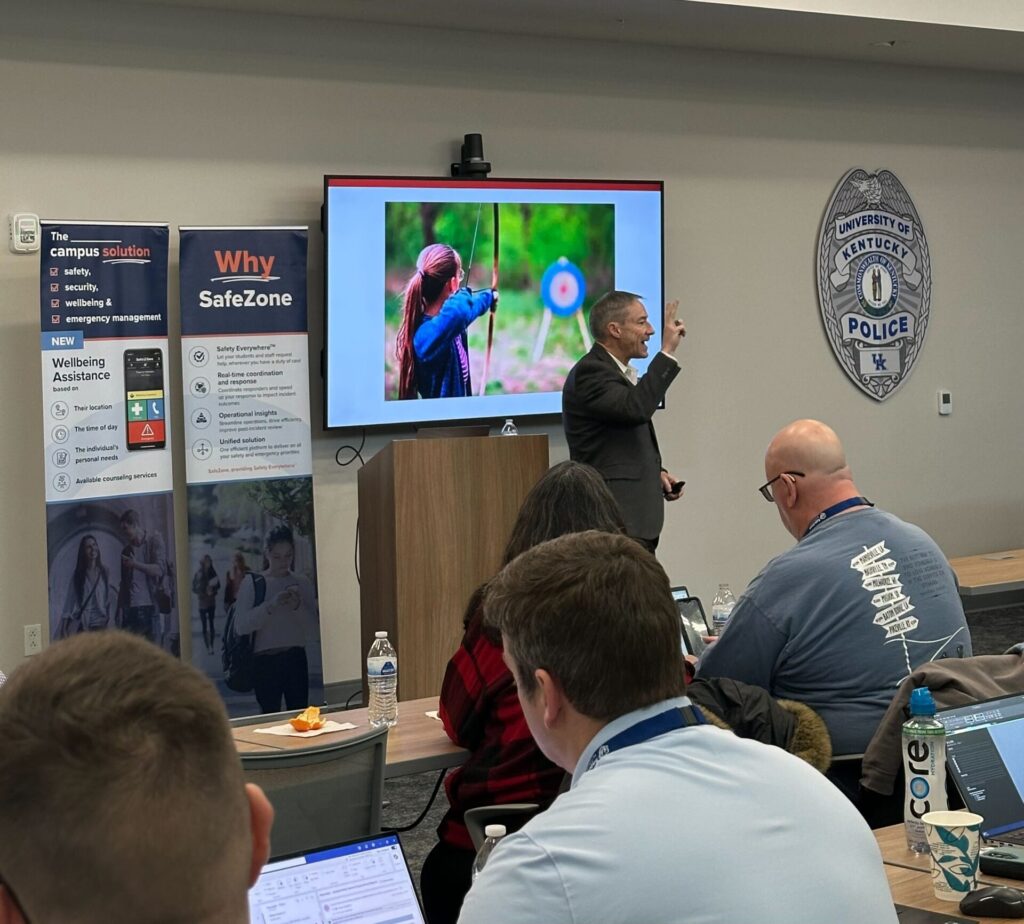
Jack Briggs, Associate Vice Chancellor for Public Safety Operations at the University of Colorado Boulder, delivered the opening keynote, “Madame Chancellor, We Have a Problem.” Drawing on survey results and real-world crisis experience, Jack explored what differentiates effective leaders when decisions must be made under extreme pressure. He emphasized that strong decision-making is grounded in principles, humility, and decisiveness – and that leaders must prepare their teams well before a crisis unfolds.
A central theme of Jack’s remarks was the importance of inviting challenge. He warned the room that if everyone around the table agrees with you, that’s a bad sign, urging leaders to be “disagree-able” and to surround themselves with people who are willing to respectfully disagree, raise concerns, and test assumptions before decisions harden. In high-stakes moments, he noted, the absence of dissent often signals hidden risk rather than true alignment.
Jack also encouraged leaders to reframe crises as solvable problems, reducing drama and enabling clearer thinking. By breaking complex situations into manageable issues, defining roles and priorities in advance, and clarifying what “good,” “better,” and “best” look like, leaders can avoid paralysis and focus on making the “least-worst,” most defensible decision available at the time. He reinforced that decision quality – rooted in a disciplined, transparent process – matters more than hindsight-driven outcomes when trust, credibility, and resilience are on the line.
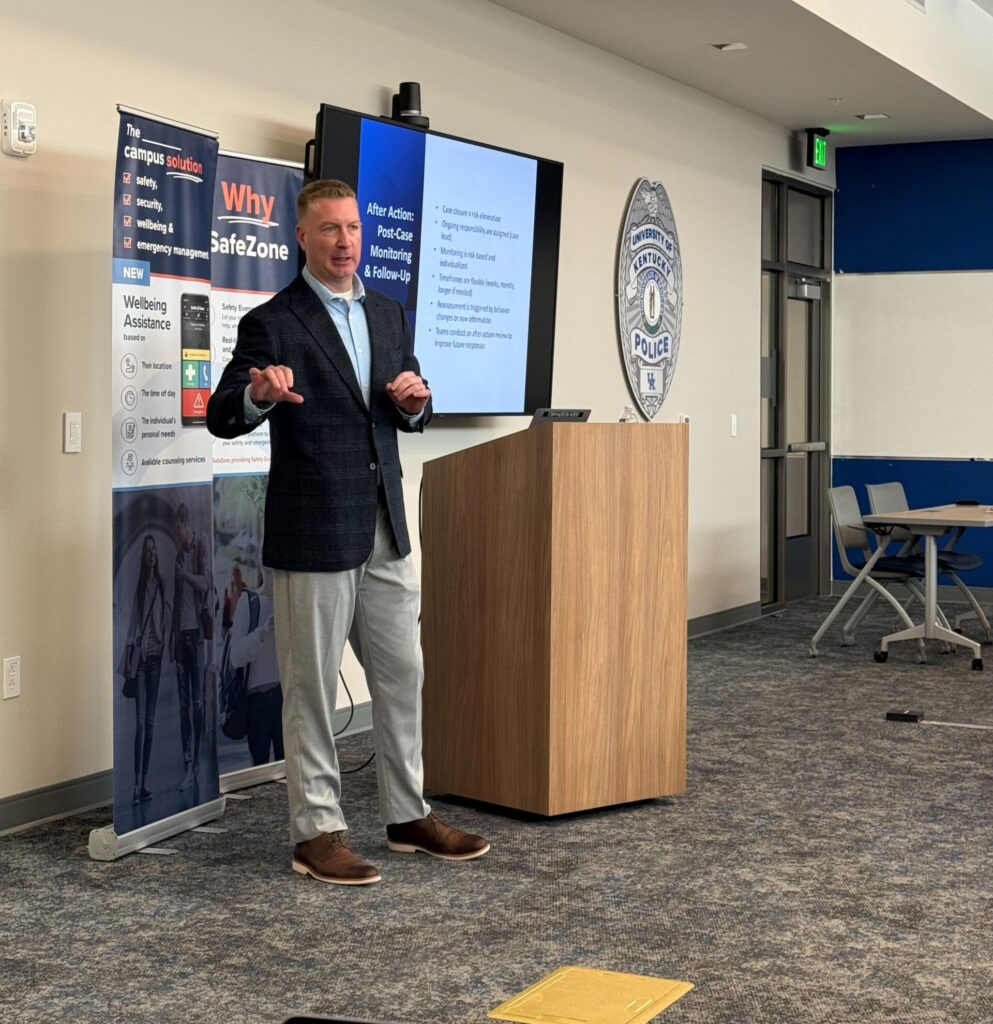
Paul Owens, Chief of Police at Case Western Reserve University, followed with a session on Proactive Threat Assessment. Paul emphasized that effective threat assessment is about prevention, not prediction, and that early, coordinated intervention can significantly reduce risk. He described how Case Western has intentionally built a multidisciplinary approach that extends beyond campus police, with shared responsibility across public safety, behavioral health, administration, and campus partners.
Paul walked through the mechanics of how the model works in practice, including multiple reporting pathways, clear triage processes, and consistent information flow to the right stakeholders. Campus police play a central role in assessing risk, distinguishing between emergency and non-emergency situations, and ensuring concerns are addressed early. He stressed the importance of discipline and documentation, including the use of precise language and regular after-action reviews to continuously improve the process.
Through case examples and audience discussion, Paul addressed common challenges such as differentiating concerning behavior from personality conflict, determining how long individuals should remain under assessment, and avoiding overreaction while still catching real risk. He reinforced that trust, communication, and adherence to process are what make proactive threat assessment effective – and that building these relationships before a crisis occurs is essential to maintaining safety and confidence on campus.
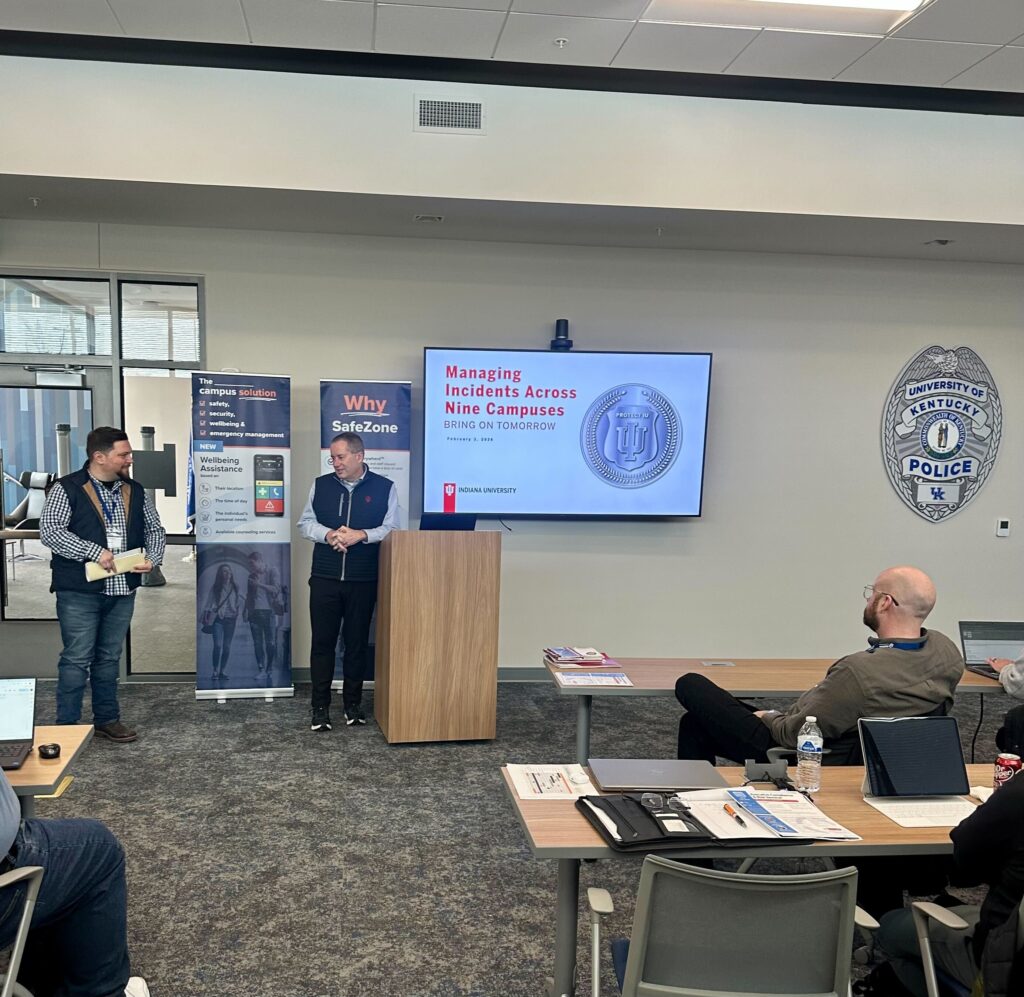
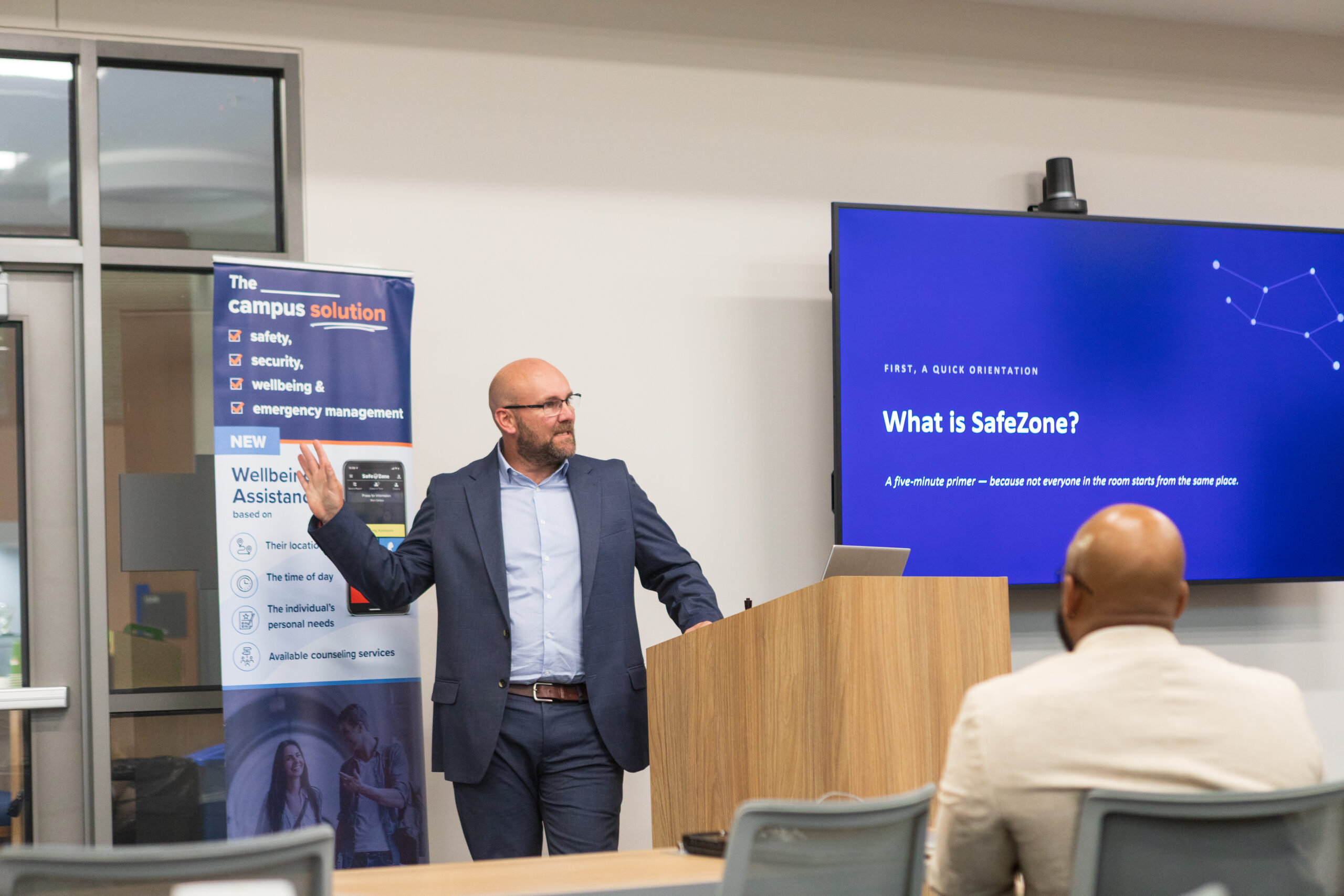
Ben Hunter, Associate Vice President for Public Safety at Indiana University, shared insights on managing incidents across a nine-campus system. He described the complexity of coordinating response across geographically dispersed campuses and the leadership discipline required to maintain consistency. Ben emphasized that strong presidential support and clear authority structures are foundational to making system-wide incident management work.
Ben outlined Indiana University’s critical decision-making and incident management framework, which is used consistently across the system and reinforced through training, documentation, and repetition. Multidisciplinary incident management teams bring together campus police, athletics, facilities, and other partners under a shared operational model aligned with national incident management practices. Checklists, dashboards, and after-action reports are central to the approach, helping teams stay on mission, reduce decision paralysis, and capture lessons learned after each incident.
Through real-world examples, Ben highlighted the importance of situational awareness at scale and the need to balance structure with flexibility. He noted that incidents evolve quickly, assumptions change, and teams must be willing to scale response up or down as conditions shift. His session reinforced that clarity of roles, consistent communication, and a strong culture of collaboration are what allow large, complex institutions to respond effectively, even when the pressure is high.
Joe Monroe, Chief of Police at the University of Kentucky, closed the symposium with a session on Enhancing Campus Security Through Technology. Joe framed the conversation around the reality of modern campus safety: increasing complexity, faster information flow, and rising expectations from leadership and the community. He emphasized that technology must support officers and decision-makers, not distract them, and that the goal is improved verification, speed, and confidence during incidents.
Joe walked through how UKPD has approached technology as a force multiplier, focusing on fewer platforms with deeper integration and a shared operational picture for dispatch, command staff, and officers in the field. Through case examples, including active shooter hoaxes and rapid verification scenarios, he demonstrated how real-time visibility allows teams to quickly determine what is real, adjust response posture, and communicate clearly with campus leadership. He stressed that real-time data is often more valuable than perfect data when decisions must be made quickly.
A recurring theme throughout Joe’s session was trust – with campus leadership, partners, and the community. He described how transparency, policy-driven decision-making, and early engagement with stakeholders have been critical to successfully implementing new capabilities, including the Security Operations Center and drone operations. Joe reinforced that leadership sets the ceiling for what is possible, and that when people, policy, and technology are aligned, institutions are far better positioned to respond confidently and responsibly to both everyday incidents and critical events.
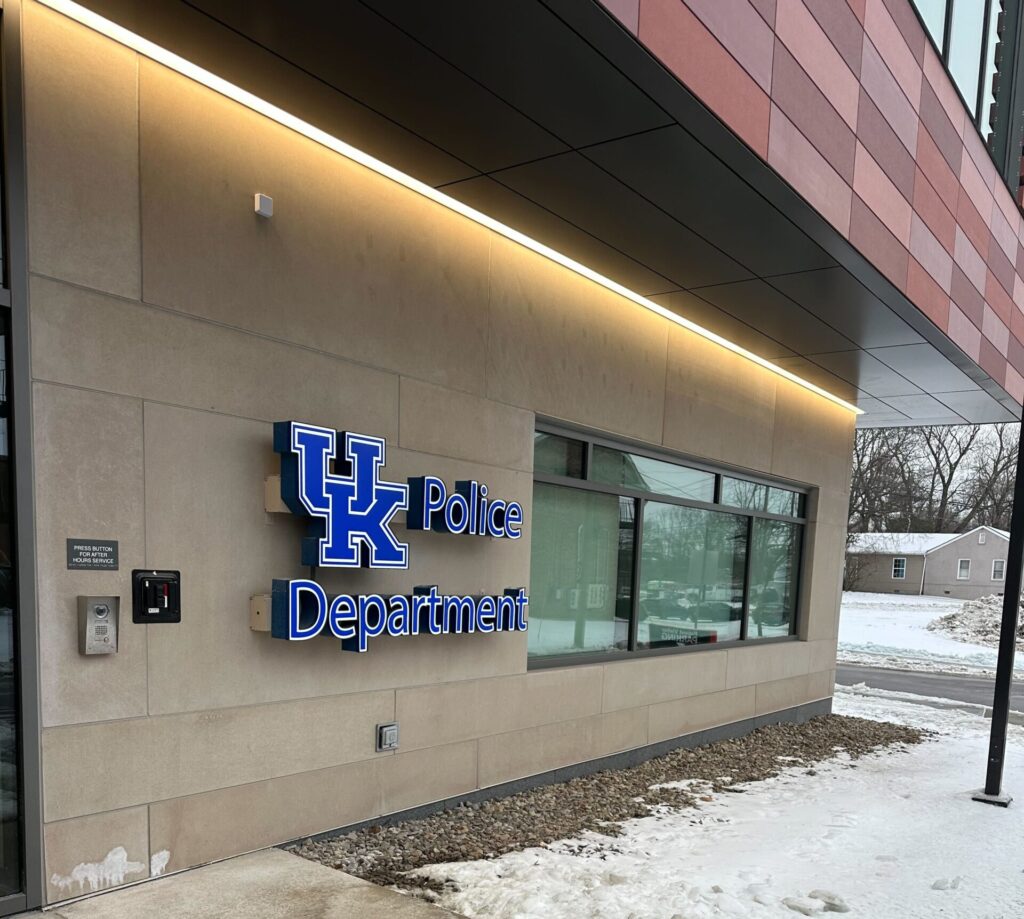
The symposium concluded with a highlight tour of the University of Kentucky Police Department’s new state-of-the-art headquarters at 152 Transcript Avenue, a facility that significantly expands UKPD’s capacity to serve and protect the campus community with updated space, improved accessibility, and expanded operations. Attendees had the opportunity to see firsthand how the department has modernized its approach to campus safety, blending thoughtful facility design with leading-edge technology to support both strategic oversight and tactical response.
A centerpiece of the new headquarters is the Security Operations Center – a 24/7 hub where UKPD personnel monitor more than 5,000 security cameras, live body-worn camera feeds, and even drone activity across campus, giving operators an “eagle-eye” view of unfolding situations. During the tour, attendees saw how the SOC enhances situational awareness and real-time decision-making, from quickly verifying reports during incidents to coordinating a more effective response across units. As Chief Joe Monroe emphasized, technology doesn’t replace boots on the ground, but it empowers officers with faster information and deeper context, improving overall safety outcomes for the community.
Continuing the Conversation
The University of Kentucky Symposium & Training reinforced that effective campus safety is not driven by any single policy, leader, or technology. It is built through alignment, preparation, collaboration, and trust – long before a crisis tests the institution.
CriticalArc extends its sincere thanks to the University of Kentucky Police Department, all featured speakers, and the attendees who contributed openly and thoughtfully throughout the two days. We look forward to continuing these conversations and supporting institutions as they work to strengthen readiness, resilience, and confidence across their campus communities.
If any part of this resonates with your team’s priorities or challenges, I’d love to connect and continue the conversation.
Nick Schneider
nick@criticalarc.com
513-432-6595

 Posted 6th Jul 2026