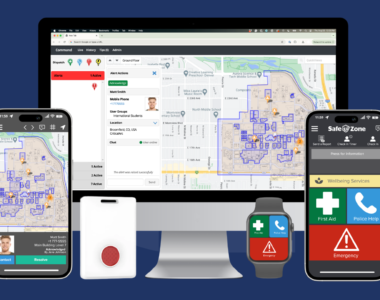


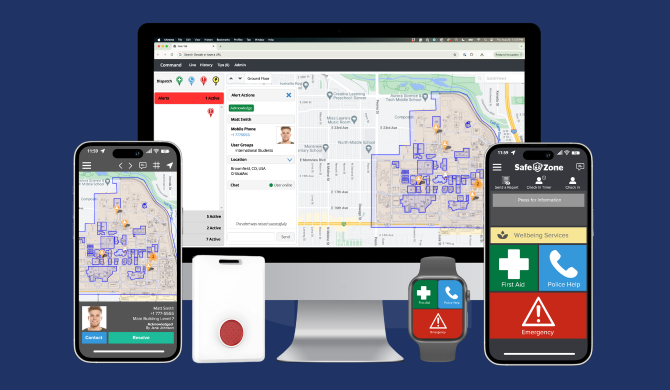
Unified safety platforms strengthen enterprise incident response coordination by connecting alerts, location, communications, dispatch, responder activity, and incident records in one operational view. The best platform reduces handoffs, improves real-time decision-making, and helps safety teams use existing people and systems more effectively.
Most organizations have invested significantly in safety and security technology. Fewer have created an operating environment in which those technologies, their people, and their processes work together seamlessly when an incident occurs. Campus security teams, healthcare organizations, and enterprise safety leaders may have separate systems for duress, mass communications, dispatch, incident management, video, access control, and other safety functions. Each may perform its individual task well. The challenge comes when people must move between those systems, correlate information, and coordinate a response in real time.
That challenge is becoming more important. Safety teams are being asked to protect larger, more complex and increasingly distributed environments, often without corresponding increases in people or budget. The question is therefore no longer simply whether organizations need more safety technology. It is whether the technology they already have enables their people to operate as effectively as possible.
A unified safety platform should help organizations do more with the resources they already have, simplify control-room operations, reduce unnecessary systems and screens, improve situational awareness, and create a more complete picture of every incident.
At CriticalArc, the makers of SafeZone, we see this challenge in physical safety operations every day. The question is not simply whether you need a unified safety platform. It is what separates a platform that genuinely improves operational effectiveness from one that simply brings more technology into the control room.
Why are organizations moving toward unified safety operations now?
Over time, safety technology estates have often grown one requirement at a time. A personal safety application is introduced for one need. A mass notification system addresses another. Dispatch, incident management, video, access control, and other technologies are added separately. The result can be a control room with multiple applications, screens, workflows, integrations, and sources of information that operators must continuously monitor and reconcile.
This creates cost, but the bigger issue is operational complexity.
During an incident, operators may need to identify an alert in one system, determine location through another, communicate with responders through radio or telephone, send mass communications through another application, and manually record information elsewhere. Every additional step creates friction.
For organizations facing pressure to do more with less, the opportunity is not simply to add another safety product. It is to simplify the operating environment. A genuinely unified approach can help organizations:
- Reduce the number of systems and screens operators need to monitor.
- Reduce duplicated workflows, administration, and training.
- Improve the effectiveness of dispatch and control-room teams.
- Bring incident, responder, location, and communications data together.
- Improve real-time situational awareness.
- Respond faster with the resources already available.
- Reduce unnecessary integrations and technology overhead.
- Potentially reduce total cost of ownership by rationalizing overlapping systems and capabilities.
The business case for unification therefore extends beyond emergency response. It is about creating a simpler, more effective and more sustainable safety operating model.
Why does response coordination break down even in well-resourced organizations?
The short answer is that organizations often plan for what individual teams should do, rather than how the entire organization will operate together during an incident.
A medical emergency on a university campus may involve campus police, health services, student affairs, and local paramedics. A workplace violence incident at a corporate facility may involve security, HR, legal, facilities management, communications, and executive leadership. Each team can have its own protocols, communication channels, information, and chain of command. When those teams also operate through separate technology systems, the incident itself becomes a coordination problem layered on top of the original threat.
Responders and control-room operators can lose valuable time switching between applications, relaying information by phone or radio, reconciling different sources of data, and manually updating stakeholders who need real-time visibility. A unified safety platform helps close that gap by providing a shared operational picture: what is happening, where it is happening, who is affected, who is responding, what actions have been taken, and what needs to happen next.
That common picture is fundamental to better decision-making.
What does “unified” actually mean in a safety platform?
“Unified” has become a common term in safety technology. The important question is what has actually been unified.
At its most fundamental level, a unified platform should bring together capabilities that have traditionally operated separately, including:
- Personal safety and duress
- Mass communications and emergency notifications
- Incident management and responder dispatch
- Real-time location and situational awareness
- Distributed command and control
- Operational reporting and incident intelligence
Why does that matter?
Because separate systems create handoffs.
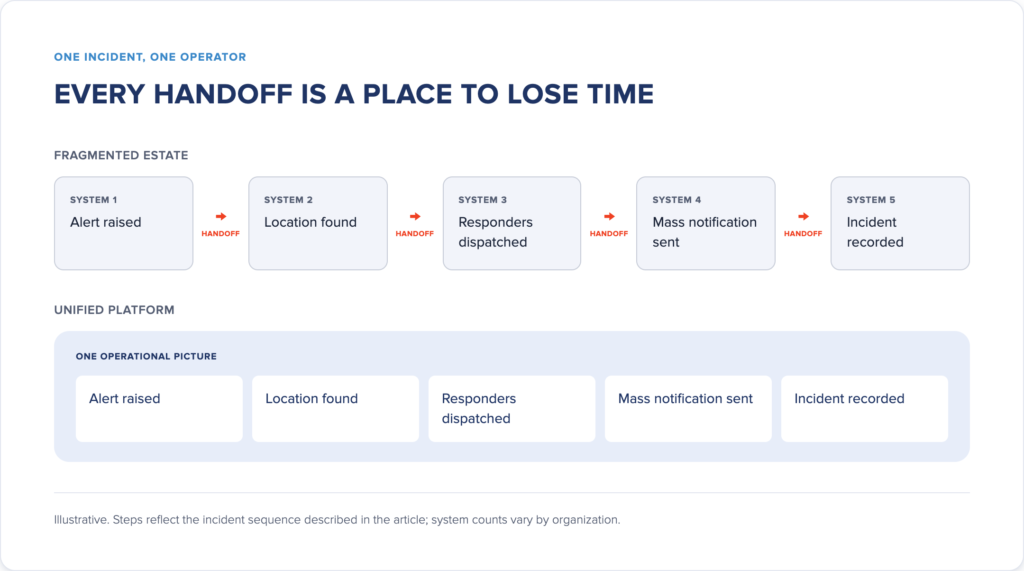
A duress alert might originate in one system. The operator identifies the person’s location through another. Responders are dispatched through radio or another application. A mass notification is issued through a separate platform. Incident information may then be recorded elsewhere.
Each system contains part of the story. The operator has to create the complete picture.
A unified platform changes that model by bringing those activities into a common operational environment.
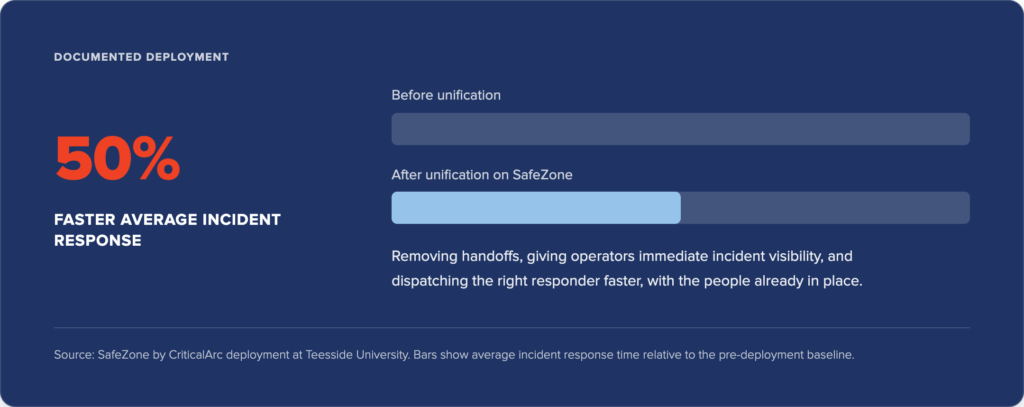
SafeZone was designed around this principle. Personal safety, responder coordination, real-time location, command and control, and mass communications can operate together, allowing information to flow through the incident rather than being recreated at each stage. The impact can be significant. In a documented deployment at Teesside University, average incident response times improved by 50%. By removing unnecessary handoffs, giving operators immediate incident visibility, and helping them identify and dispatch the right responders faster, unification can improve operational performance.
That improvement is particularly important when organizations are being asked to do more with existing resources. Faster response is not simply about adding more people. It is about enabling the people already available to work more effectively, with better information, fewer operational steps, and a common real-time picture of the incident.
How can a unified platform improve control-room effectiveness?
Technology should reduce the cognitive load on an operator, not increase it. Yet, many control rooms have accumulated multiple screens and applications that operators must continuously monitor. During routine operations this creates inefficiency. During a major incident it can become a significant operational problem. Every additional screen an operator must check and every system they must navigate competes for attention.
The goal should therefore be to move from multiple systems providing fragments of information to a common operational picture providing actionable information. An effective unified platform allows an operator to see an incident, understand its location, identify available responders, dispatch the appropriate resources, communicate with affected people, and monitor the response without continually changing systems. This can be particularly valuable for organizations with lean safety teams.
If technology reduces administrative tasks, duplicate data entry, and unnecessary coordination overhead, skilled operators and responders can spend more of their time managing the incident itself. In that sense, unification becomes a force multiplier. It helps organizations increase the effectiveness of the people they already have.
How should you evaluate real-time situational awareness?
Situational awareness is more than displaying information on a map. It is the ability to understand what is happening now and use that information to make a better decision. There are several important questions to ask.
- First, can you see the real-time location of responders, affected individuals and the incident itself within the same operational view? For complex environments, this may require indoor positioning capable of identifying the building, floor or area where assistance is required rather than simply showing an address.
- Second, can operators identify the most appropriate responder based on their location and availability, dispatch them and see their response in real time?
- Third, can responders themselves share situational awareness rather than relying exclusively on information relayed through the control room?
- Fourth, can the organization maintain that common operational picture as an incident escalates from a routine call for assistance into a major emergency involving multiple teams or locations? The objective is not more data. It is better information, presented to the right people at the right time.
Why does unified incident data matter?
Fragmented technology also creates fragmented data.
If an alert originates in one application, dispatch occurs through another, communications are sent through another, and incident records are stored somewhere else, understanding exactly what happened can require information to be manually assembled after the event.
A unified platform has the opportunity to create a much richer incident record. The original alert, location, responder assignments, communications, acknowledgements, movements, actions, and resolution can contribute to the same operational history. That matters during an incident because decision-makers have better information. It also matters afterwards.
Organizations can review what happened, identify response bottlenecks, understand resource deployment, assess performance, and use those insights to improve future operations. Heat maps, incident replay, response-time analysis, and operational benchmarking can transform incident data from a compliance record into a tool for continuous improvement. Instead of simply asking “Did we respond?”, leaders can begin asking “How effectively did we respond, and how can we improve?”
How can a unified audit trail support Clery Act workflows?
For U.S. colleges and universities, the Clery Act requires covered institutions to disclose specified campus crime and security information and, when applicable, maintain a daily crime log. A unified, time-stamped incident history can make it easier to reconstruct alerts, notifications, acknowledgments, responder assignments, and actions for internal review and reporting workflows. Technology can support those processes, but it does not by itself establish compliance.
“Campus safety isn’t just an operational or compliance concern; it must be a top priority for executive leaders.” — Jim Moore, Senior Executive Consultant, CriticalArc; U.S. Department of Education (Ret.)

What role do mass communications play inside a unified platform?
Mass communications are an essential capability, but sending a message is only one part of managing an emergency. The differentiator is whether communications are integrated into the response workflow or operate as a separate activity.
In a fragmented model, an operator identifies an incident, changes systems to create an emergency notification, sends the message, and then returns to another application to continue coordinating responders. In an integrated environment, alerting, responder coordination, and communications form part of the same incident workflow. Operators can understand who is affected, communicate with the appropriate population, see who has received or acknowledged information, and continue managing the operational response from a common environment.
Geo-targeted communications can further improve this by allowing organizations to communicate specifically with people in an affected building, zone, or location rather than unnecessarily alerting an entire population. That can reduce notification fatigue while ensuring the people closest to an incident receive the most relevant guidance.
Can unification reduce the cost and complexity of safety technology?
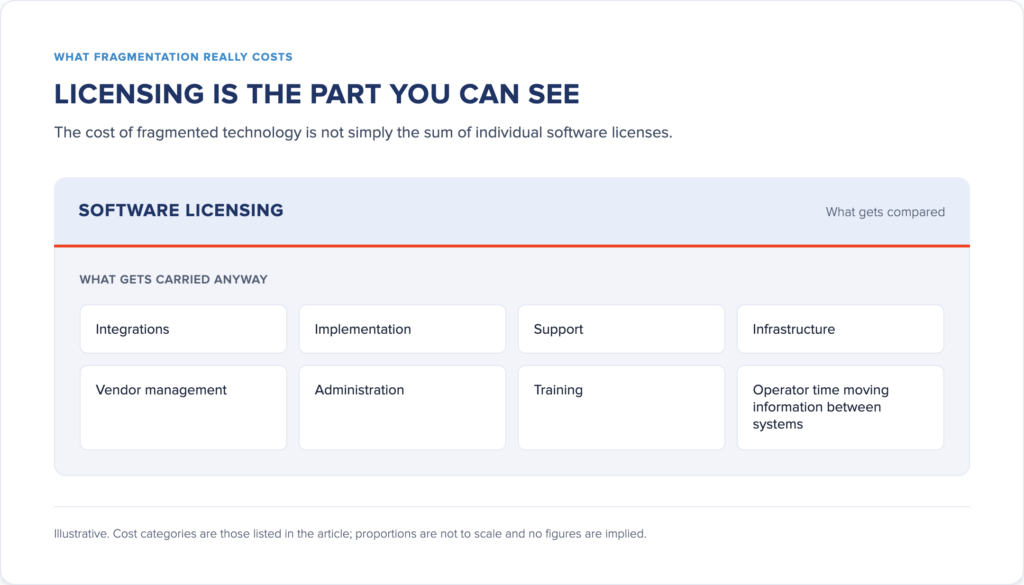
This should be an important part of any platform evaluation. The cost of fragmented technology is not simply the sum of individual software licenses. Organizations should consider the total cost of ownership associated with maintaining multiple systems, including software licensing, integrations, implementation, support, infrastructure, vendor management, administration, training, and the operational time required to move information between systems.
There may also be significant capability overlap. If a unified platform can replace or reduce reliance on multiple point solutions while improving operational effectiveness, the organization may be able to simplify both its technology architecture and its commercial arrangements.
This does not mean consolidation should be pursued simply to reduce the number of vendors. Specialist systems will continue to have important roles. The question is whether every system needs to be a separate operational destination for the control-room operator.
The best unified platforms should be capable of acting as an operational layer that brings relevant information and workflows together while continuing to interoperate with specialist technologies where they add value.
How does a unified platform support duty of care?
Duty of care extends beyond fixed buildings and traditional campus or workplace boundaries. Organizations increasingly need to protect people across multiple campuses, hospitals, offices, remote locations, field operations, and international travel. A unified platform should therefore provide a consistent safety experience wherever an organization’s duty of care applies.
At CriticalArc, we describe this principle as Safety Everywhere™. That means enabling people to request assistance and organizations to communicate, coordinate, and respond regardless of whether someone is on the main campus, working alone, visiting another site, or traveling internationally. The platform should also provide a defensible operational record. After a significant incident, leadership, regulators, or legal teams may need to understand what happened, when it happened, who was notified, who responded, and what actions were taken. A detailed incident history supports both accountability and continuous improvement.
What separates a platform that coordinates response from one that only detects and alerts?
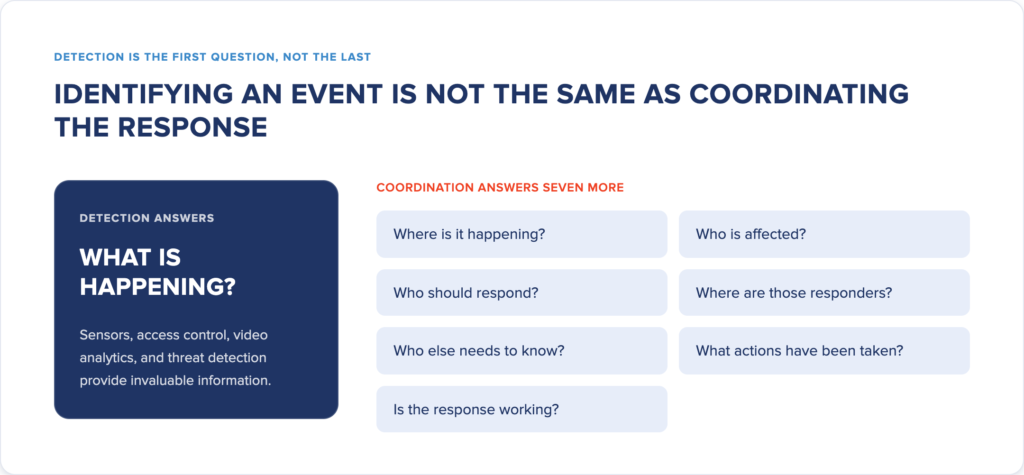
Detection answers the first question: What is happening?
Effective incident response requires organizations to answer several more:
- Where is it happening?
- Who is affected?
- Who should respond?
- Where are those responders?
- Who else needs to know?
- What actions have already been taken?
- Is the response working?
Sensors, access control, video analytics, and threat detection technologies can provide invaluable information, but identifying an event is not the same as coordinating the response to it.
CriticalArc built SafeZone around that coordination challenge. Distributed command and control enable organizations to understand responder location, assign resources, adjust the response as circumstances change, and maintain visibility as the incident develops.
That coordination layer turns a collection of individual technologies and individual actions into a managed operation.
What questions should you ask before making a platform decision?
Choosing a unified safety platform should start with operational outcomes rather than a feature comparison. Ask:
- How many systems and screens does our control room currently need to monitor to manage an incident?
- Could those workflows be simplified or consolidated?
- Does the platform genuinely combine personal safety, mass communications, incident management, and command and control, or simply integrate separate products?
- Will it help our existing people manage more effectively and enable us to do more with the resources we already have?
- Does it provide a single real-time operational picture of incidents, responders, and affected people?
- Can information from an incident be captured into a common record rather than reconstructed from multiple systems afterwards?
- Can the platform integrate with specialist technologies we need to retain without forcing operators to continuously move between them?
- Can we rationalize existing systems, licenses, integrations, infrastructure, or support arrangements as a result?
- What is the total cost of ownership compared with maintaining our existing collection of point solutions?
- Can the platform be deployed quickly and expanded without significant additional infrastructure?
- Does it protect people beyond our primary locations, including lone workers, remote staff, and travelers?
- Does the platform provide the operational intelligence required to measure and continuously improve response performance?
- Is the vendor simply providing technology, or will they work alongside us to improve how our safety operation performs?
The case for unification
The strongest argument for a unified safety platform is not simply that it puts multiple capabilities into one product. It is that unification can change the operating model.
Safety and security teams are being asked to protect increasingly complex and distributed communities while managing pressure on people, budgets, and resources. Continuing to add standalone systems can increase capability, but it can also increase complexity. More applications. More screens. More integrations. More training. More data silos. More operational handoffs.
The alternative is to simplify. Bring critical information together. Give operators and responders a common operational picture. Reduce unnecessary steps between receiving an alert and acting. Capture richer incident information. Improve the utilization of existing resources. Rationalize overlapping technology where appropriate.
Ultimately, the goal is not to have fewer systems for the sake of having fewer systems. It is to enable people to make better decisions, faster, with less operational friction. SafeZone was built around that objective: unifying personal safety, communications, situational awareness, and distributed command and control to help organizations protect their people wherever duty of care applies.
When evaluating a unified safety platform, don’t start by asking how many features it has. Start with a more important question: Will this make our entire safety operation simpler, more informed, and more effective?
Build the business case with better data
Compare platform choices using financial, operational, and strategic evidence. Read Maximizing Campus Safety and Institutional ROI for more data to inform your evaluation.


 Posted 8th Oct 2026